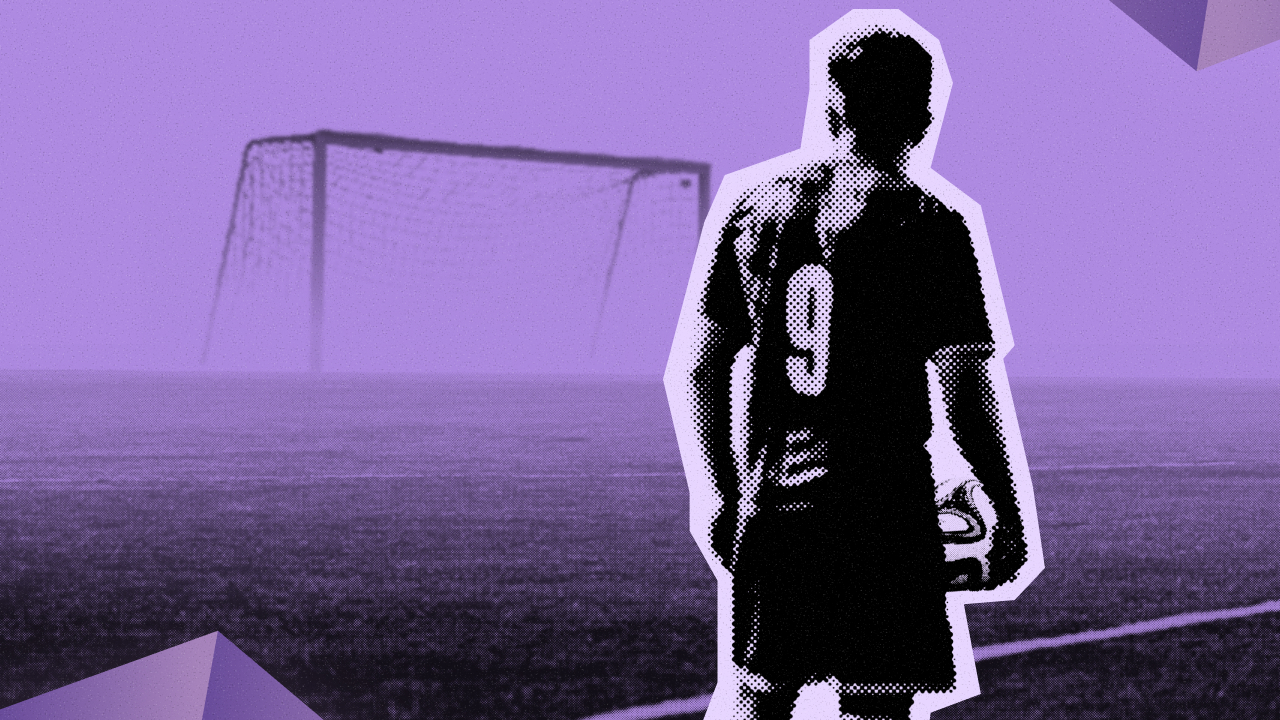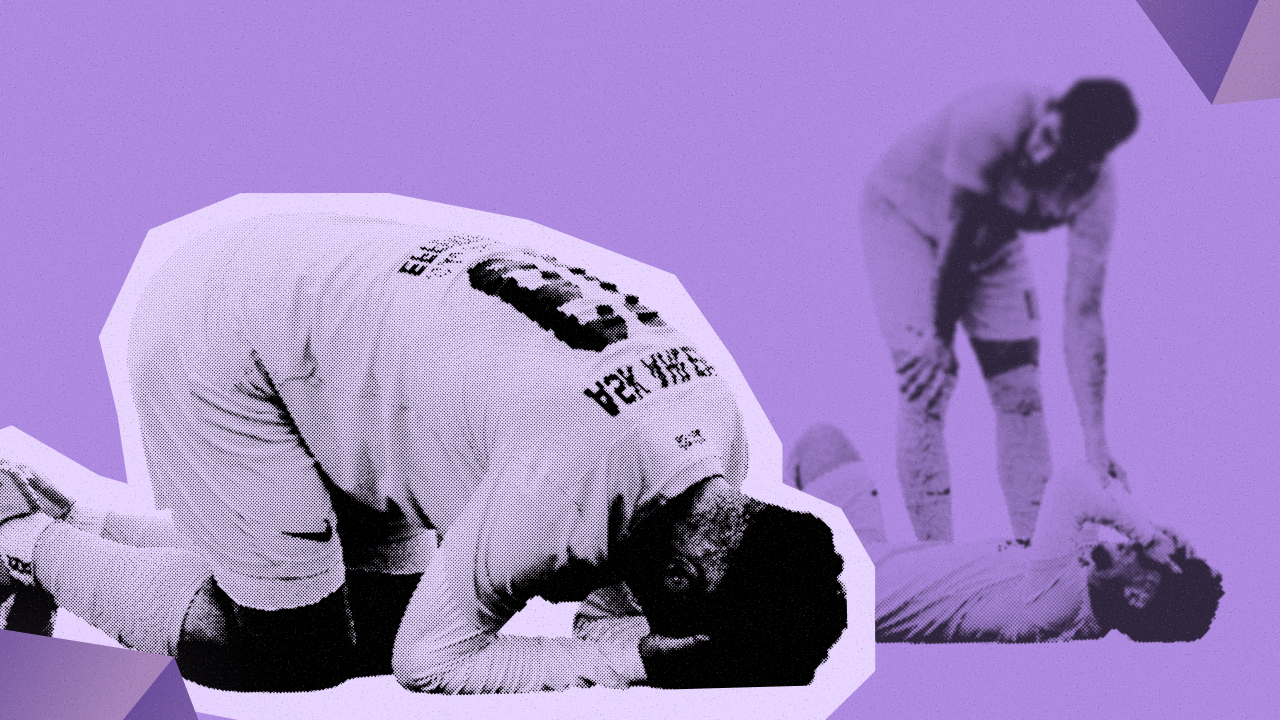
Your heart is hammering. Your legs feel heavy. Your mouth is dry. The warm-up felt fine, but now, standing here, about to actually do it, your body is doing something completely different to what you need it to do.
This is performance anxiety. And if you’ve competed at any level, you’ve felt some version of it.
It’s worth being clear about what it actually is. Performance anxiety isn’t the same as nerves. Everyone gets nervous before competition. That low-level anticipation is normal, and often useful. Performance anxiety is what happens when that response tips into something that actively gets in the way: the racing thoughts, the muscle tension, the feeling that your body belongs to someone else.
It’s also not the same as having a mental health problem. Performance anxiety is a specific response to a specific situation: the high-stakes, publicly evaluated, results-matter environment of competitive sport. It’s your threat response firing in a context it wasn’t originally designed for.
Why your body does this
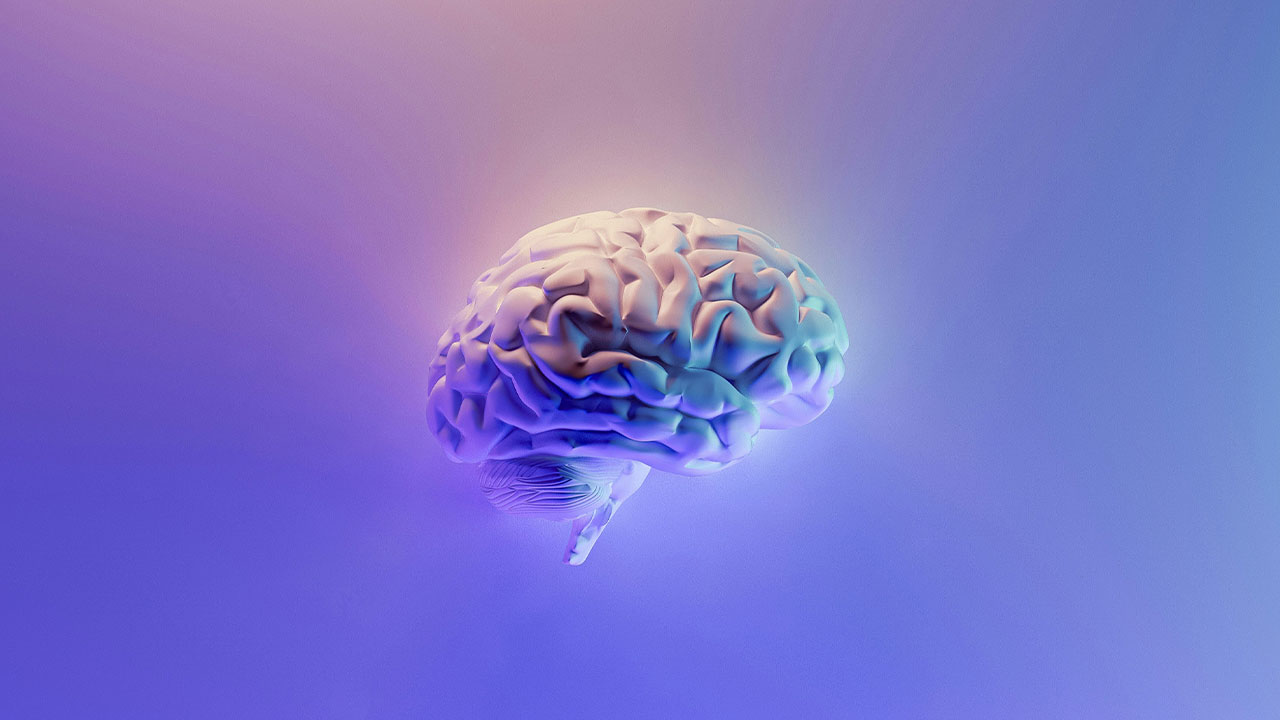
When your brain reads a situation as threatening, a final, a penalty, a decisive race, it triggers the same stress response it would for a physical danger. Research by Dickerson and Kemeny (2004), across 208 studies, established that tasks involving social evaluation, where your performance is publicly judged, produce the largest and most reliable stress responses of all. Sport is the definition of social evaluation. Your brain reads all of it as threat.
Here is what that looks like, step by step.
1. Amygdala activation (threat detection)
- The amygdala rapidly interprets the situation (e.g., competition, crowd, pressure) as a threat rather than a challenge.
- This triggers the fight-or-flight response.
Result: you feel fear, tension, and urgency.
2. Prefrontal cortex disruption (thinking brain impaired)
- The prefrontal cortex (responsible for decision-making, focus, and control) becomes less efficient.
- This is sometimes called “amygdala hijack”, a term coined by Daniel Goleman in Emotional Intelligence (1995).
Result: poor decision-making, overthinking or “paralysis by analysis”, and reduced attentional control.
3. Increased sympathetic nervous system activation
- The body releases adrenaline (epinephrine) and cortisol.
- Heart rate increases, breathing becomes shallow, muscles tense.
Result: useful for survival, but harmful for fine motor skills and precision tasks.
4. Motor cortex and basal ganglia disruption
- Well-learned skills are usually automatic (controlled by basal ganglia).
- Under anxiety, control shifts back to conscious processing via the cortex.
Result: movements become stiff and less fluid, with a loss of timing and coordination.
5. Attentional narrowing (tunnel vision)
- The brain prioritises threat-related information.
- Reduced ability to scan the environment effectively.
Result: missed cues from teammates, space, and timing, leading to slower and poorer decisions.
In short, your brain thinks you’re in danger, so it switches from playing freely to trying to protect you. The result is reduced fluidity of movement, impaired decision-making, increased muscle tension, and a loss of automatic skill execution. Performance anxiety is not a mental failing. It is a biological survival system activating at the wrong moment.
Jonny Wilkinson, one of the most decorated rugby players England has ever produced, described being locked in a toilet cubicle minutes before kick-off at Toulon, crouched over his phone trying to reach his kicking coach, while his teammates waited outside. His words: “I was supposed to be giving the ‘come on we can do this’ speech and I was a shivering wreck in the toilet.”
If it happened to him, it happens to everyone. The question isn’t whether you’ll feel it. It’s what you do with it.
The insight that changes everything
Here is what the research actually shows, and it might surprise you.
In a series of studies through the 1990s, sport psychologist Graham Jones and his colleagues compared elite and non-elite athletes on one simple measure: how anxious they felt before competition. The finding was not what most people expect. The elite athletes did not feel less anxious. They felt roughly the same level of anxiety as everyone else.
What separated them was not the intensity of the feeling. It was what they did with it.
Elite performers consistently interpreted their anxiety symptoms as helpful. The racing heart, the butterflies, the heightened alertness: they read those signals as signs that they were ready, not signs that something was wrong. Less experienced athletes felt the same sensations and read them as a threat.
Same symptoms. Completely different meaning. Significantly different performance.
This is known as the directional model of anxiety, and it reframes the whole conversation. The goal is not to get rid of your nerves before a big game. That’s neither realistic nor, it turns out, particularly useful. The goal is to change your relationship with them.
Sha’Carri Richardson, one of the fastest women in the world, put it plainly after winning the 100m at the 2024 Prefontaine Classic: “I wouldn’t be human to say that I wasn’t nervous. But I used that, as my coach said, as motivation.”
That is not a platitude. It is a skill. And like every other skill in sport, it can be developed.
What you can do about it

The evidence points to a handful of approaches that consistently work. None of them require you to feel calm before you compete. They require you to manage what’s happening in your body and your head well enough to perform.
Breathing
Controlled breathing is the most accessible tool available, and one of the most researched. Slow diaphragmatic breathing, breathing from the belly rather than the chest, activates the parasympathetic nervous system and brings your heart rate down. It does not eliminate anxiety, but it takes the edge off the physical response quickly enough to matter. Two to three slow breaths before a key moment costs you nothing and has a measurable effect.
Reframing the feeling
Rather than trying to calm down, try reframing what the anxiety means. Psychologist Alison Wood Brooks found that people who told themselves “I am excited” before a high-pressure performance consistently outperformed those who tried to relax. Anxiety and excitement are both high-arousal states. The shift from one to the other is a change in meaning, not a change in physiology. Telling yourself your nerves mean you’re ready is not wishful thinking. It’s applying what the research on elite athletes already shows.
Self-talk
What you say to yourself in high-pressure moments matters. A meta-analysis across 32 studies found a meaningful positive effect of self-talk on performance. Brief, deliberate cue words, something like “trust it” or “stay present”, work better than long internal monologues. The key is choosing them before you need them, not improvising in the moment.
Pre-performance routines
Rafael Nadal’s pre-match rituals are not superstition. In his own words: “It’s a way of placing myself in a match, ordering my surroundings to match the order I seek in my head.” A consistent routine before competition reduces uncertainty, narrows your focus, and gives your nervous system something familiar to anchor to. Research confirms that pre-performance routines reduce somatic anxiety and improve performance, particularly under pressure.
Imagery
Spending time mentally rehearsing not just your performance but your response to anxiety itself is one of the more underused tools available. Imagining yourself feeling nervous and handling it well, staying composed, executing your skills, builds the same mental pathways as doing it in practice. It prepares you for the experience rather than leaving you surprised by it.
None of these are complicated. The difficulty is building them into your preparation before you need them, not reaching for them when you are already in the middle of a difficult moment.
It’s a skill, not a personality trait
Performance anxiety is not a flaw in your character or a sign that you are not cut out for competition. It is a predictable physiological response to an environment that demands something from you. Every athlete feels it. The ones who perform consistently well are not the ones who feel less of it. They are the ones who have learned to work with it.
That learning is part of the broader work of mental performance in sport: understanding how you think, respond, and compete under pressure, and developing the skills to do it better.
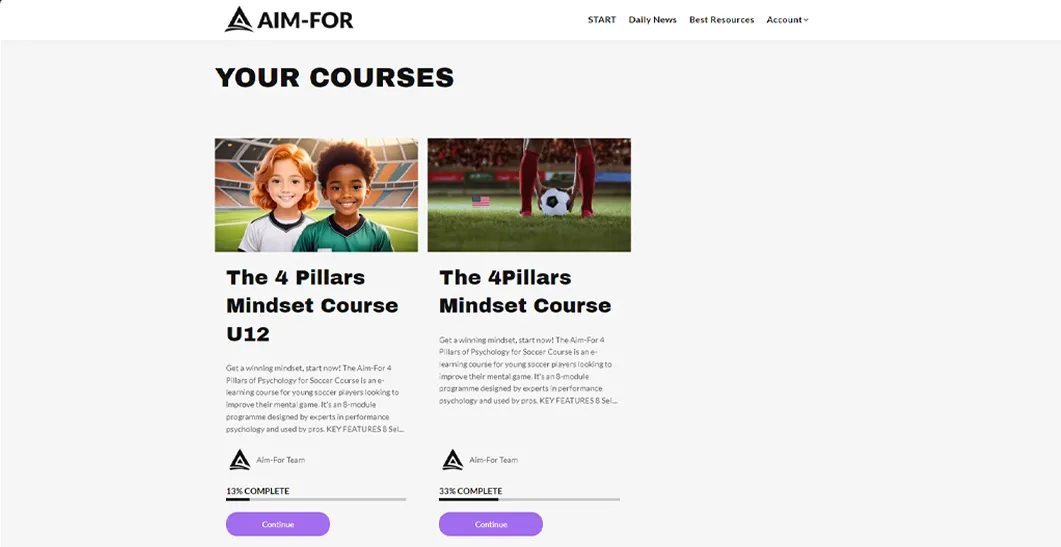
If you want a structured way to build those skills, The 4Pillars Courses were designed for exactly that. Every course is grounded in the same evidence-based framework used inside professional sport, and built to be worked through at your own pace.
Explore The 4Pillars Courses →
Sources
- Dickerson, S.S., & Kemeny, M.E. (2004). Acute stressors and cortisol responses: a theoretical integration and synthesis of laboratory research. Psychological Bulletin, 130(3), 355–391.
- Jones, G., & Swain, A. (1995). Predispositions to experience debilitative and facilitative anxiety in elite and nonelite performers. The Sport Psychologist, 9, 201–211.
- Brooks, A.W. (2014). Get excited: Reappraising pre-performance anxiety as excitement. Journal of Experimental Psychology: General, 143(3), 1144–1158.
- Hatzigeorgiadis, A., Zourbanos, N., Galanis, E., & Theodorakis, Y. (2011). Self-talk and sports performance: a meta-analysis. Perspectives on Psychological Science, 6(4), 348–356.
- Rupprecht, F., Tran, U.S., & Gröpel, P. (2021). Pre-performance routines in sports: a meta-analysis. International Review of Sport and Exercise Psychology.
- Goleman, D. (1995). Emotional Intelligence: Why It Can Matter More Than IQ. Bantam Books.