About Us
Learn about AIM-FOR, the company behind The 4Pillars. Explore our history and our long-standing commitment to mental well-being and elite performance.
AIM-FOR was founded in 2010, by brothers Lee and Nick Richardson.
Both are ex-professional footballers and their respective careers are the foundations of Aim-For. Together, they created Aim-For to help people to improve their mental health and mental performance producing The Safety Net mental health platform,4Pillars Track and the 4Pillars Courses.
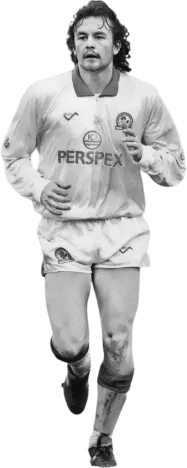

Lee Richardson
Lee’s career as a performance psychologist has seen him help some of the most elite sporting teams in the world.
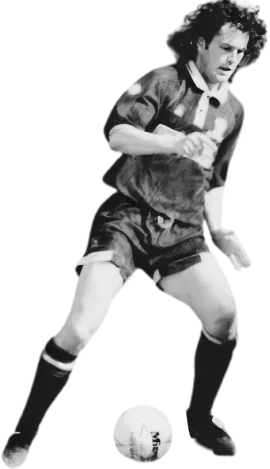
Nick Richardson
After his degree in IT, Nick spent over 10 years teaching in high school and developed a passion for supporting the minds of young people.
Our Team
Our Psychology Contributors
We utilise experts across the technological & psychological landscape in our initiatives & causes.
Prof. Lindsey Blom
Based in Indiana in the USA, Dr. Lindsey Blom, CMPC, AASP Fellow, Ball State University (BSU) Professor of Sport & Exercise Psychology, Certified Mental Performance Consultant, Faculty Athletics Representative, and Graduate Program Coordinator is a leading science-practice scholar whose work focuses on using sport for social change with an emphasis on positive youth development and using sport to promote peace at the individual, community, and international levels.
As an invited round-table expert, she has advised the Center on Global Counter terrorism Cooperation and Hedayah on using sport to counter violent extremism and serves on the BOD for Dream Sports Africa and BSU’s Center for Peace and Conflict Studies. In her career, she has secured nearly a million dollars in external funding, with a recent project involving exploring peace indicators of Liberian youth in a sport for development program, implementing sport for social change programs in India, Jordan, and Tajikistan, developing a values-based curriculum for recreational sport leagues, and investigating local after school sport for peace programs.
Dr. Blom has also co-authored numerous journal articles, book chapters, and a book, Survival Guide for Coaching Youth Soccer. She has served as the Chair for the National Association for Sport & Physical Education Task Force authoring the ‘maximizing benefits of youth sport’ position statement and serves on AASP’s Journal of Applied Sport Psychology Editorial Board and the NCAA Men’s Basketball Oversight Committee.
To accompany her educational and research experiences, Lindsey is a Hall of Fame Division I and former semi-professional soccer player, with a combined 20+ years of experience coaching youth soccer and working with youth through collegiate clients as a CMPC.
Andrea Clarke
Andrea is a BPS chartered and HCPC registered psychologist. She specialises in Heart Rate Variability and bio feedback training, performance enhancement in the areas of coaching psychology, performance psychology and sport and exercise psychology; working with athletes from elite to amateur level, performing artists (performance anxiety), students (examination anxiety), and SMEs who need to improve team performance.
Ross White
Ross is the research Director on the Doctorate of Clinical Psychology training programme at the University of Liverpool. He leads the ‘Mental Health in Context’ research group at the Institute of Psychology, Health and Society, University of Liverpool. Ross has a keen research interest in Global Mental Health and was lead editor of ‘The Palgrave Handbook of Socio-cultural Perspectives on Global Mental Health.
Peter Leakey
Peter is a clinical psychologist with over 43 years of experience with the NHS and private practice. His long and varied career has given him extensive experience in matters related to Adult Mental health and Clinical Health Psychology, and in recent years the application of psychological knowledge to Sport.
Prof. Graham Turpin
Graham’s research areas encapsulate clinical psychophysiology, cognitive processing in anxiety and post-traumatic stress disorder, early interventions for PTSD, psychotherapy evaluation and single case methods, workforce planning models, and diversity issues within applied psychology education and training.
Dr. David Blakelock
David was a promising soccer player and represented Newcastle United and Nottingham Forest as an academy/centre of excellence player (across the age groups). He also played soccer for his school, district, county and university.
In view of a career in professional soccer not materializing and his interests in mental health/well-being and the psychological aspects of sports performance, he pursued a career in psychology. He graduated from Durham University with a degree in Psychology, before completing MSc’s in Applied Psychological Research and Sport and Exercise Psychology (both with Distinction) and a professional Doctorate in Clinical Psychology.
He is now a clinical psychologist currently practicing in the NHS and independently. He is also registered with the Health and Care Professions Council (HCPC) and British Psychological Society (BPS). In addition, he is in training Sport and Exercise Psychologist through the BPS.
Dr. Martin Turner
Martin’s main expertise is within the scientific understanding of human performance and well-being under pressure and adversity, and the application of psychology within achievement settings. His work centres on the psychophysiology of stress, emotion management using cognitive-behavioural approaches (rational emotive behaviour therapy; REBT), and the transference of research to practice through consultancy.
These three main areas of focus inform his teaching at all levels, his collaboration with external partners, and his engagement with the wider public and academic community. Most of his current projects involve the examination of REBT in performance settings. This includes measuring development and refinement, applied work drawing on single-case designs, and theoretical advancements.
He is interested in how REBT can be used with performers across many domains to promote psychological well-being and mental health for the benefit of short and long-term performance.He is the recipient of the 2018 Albert Ellis Award for Research for his paper on the use of REBT to promote mental health in athletes
Prof. Matt Slater
Matt is the Associate Professor at the School of Life Sciences, Staffordshire University the psychology of sport and exercise has always interested him and has been a profound passion of his since his early attempts to open the batting for his local cricket team in Lancashire.
“During school and college, I knew I wanted to read for a degree in Sport and Exercise Psychology and that brought me to Staffordshire University in 2006”.
He graduated from Staffordshire University with first class honors in Sport and Exercise Psychology (BPS accredited) in 2009, before completing an MSc Sport and Exercise Psychology (with Distinction, BPS accredited) at Loughborough University in 2010. In November 2010.
He started a PhD examining the social identity approach to leadership under the supervision of Dr. Jamie Barker, Professor Marc Jones, and Dr. Pete Coffee. Alongside his PhD he completed a Post-Graduate Certificate in Higher and Professional Education.
James Maurice
James is a BPS Chartered Sport and Exercise Psychologist and is currently carrying out a PhD looking into parental engagement within elite academy soccer.
James has worked with both international and amateur athletes across a wide range of sports including soccer, netball, rugby, and hockey.
He has over 8 years experience as a Sport Psychologist within elite academy soccer, and has worked alongside the highest level of coaches and sport science staff in the industry. He currently works for a Premier League category 1 academy alongside completion of his PhD.
Ass. Prof. Ricardo Lugo
Ricardo Lugo is a psychologist based in Norway with international experience as an applied practitioner, university lecturer, and researcher. He has consulting experience in Norway, Canada, Czech Republic, Italy, USA and the UK within elite sports, education, and health.
Ric works with individuals and teams from a number of sports including football, golf, skiing, equestrian, basketball and luge and bobsleigh, and at all levels of ability from recreational to elite performer.
He collaborates with military organizations as well as professional and amateur sport clubs and professional. Ric also has expertise in experimentation and applied education interventions focused within Human Factors and Cognitive Engineering in cyber domains, where he researched on the interaction of individual aspects of human behaviour (micro cognition) incorporating concepts such as self-efficacy, resilience, metacognition, and naturalistic environments (macro cognition) and has published research in number of scientific journals.
Ric also incorporates performance predictors such as time-pressure, risk, ambiguity, and intuitive decision-making. He has also developed applied education interventions that focus on accelerated learning both in sports and in military contexts. Ric’s expertise in predictors of performance under pressure, in high-stake situations and in mental preparation in addition to experimental psychology, have contributed as evidence-based scientific techniques to the development of assessment, research and educational designs.
Ric has cognitive-behavioural philosophy that is focused on emotion regulation and has training in Acceptance Commitment Therapy(ACT), Cognitive Behavioural Therapy (CBC), and Mindfulness-Based Stress Reduction (MBSR).